


We assume AI systems tend to surface large, well-known ecommerce brands; marketplaces lead many commercial answers; and the playbook is to optimize product pages, category pages, product feeds, and structured data to improve a site’s machine readability.
Although product detail pages (PDPs), product listing pages (PLPs), feeds, and structured data are important to AI search optimization, after reviewing AI citation sources, cited pages, and Gen AI traffic pages across five US ecommerce subverticals -general marketplaces, beauty and skincare, fashion and apparel, consumer electronics, and sports and outdoors- using Semrush Enterprise AIO data and Similarweb AI Traffic, a more nuanced pattern emerges.
AI platforms don’t only cite the page where the transaction happens, they often cite the page, source, or third-party environment that helps resolve the buyer’s uncertainty before, around, or after the purchase. At the same time, the pages users actually visit from AI platforms aren’t always the same pages AI systems cite as evidence.
This is why Ecommerce AI search optimization can’t be reduced to making PDPs more LLM friendly, but it also can’t be measured only by which pages get cited. Product and category pages are part of the equation, but they sit within a broader evidence and click layer that includes guides, support content, policies, size and fit resources, reviews, communities, marketplaces, videos, expert media, and other third-party sources.
What the ecommerce AI search citation and traffic analysis shows
For this analysis, I reviewed AI citation source, cited page data and Gen AI traffic for 25 leading ecommerce sites across five US subverticals: general marketplaces, beauty and skincare, fashion and apparel, consumer electronics, and sports and outdoors, using Semrush Enterprise AIO and Similarweb.
I grouped cited sources and pages into directional categories based on domains, URLs, page intent, and available weighted fields. The goal was to identify recurring patterns across the dataset, not to claim complete market-wide citation share, prove causality, or reverse-engineer an AI ranking system.
I then complemented this with Gen AI traffic data for the same ecommerce sites and subverticals over the last 90 days, to identify which owned pages users actually visit from AI platforms. This adds a second layer to the analysis: citation data helps identify which pages and sources AI systems use as evidence, while Gen AI traffic data helps identify which pages attract measurable visits after an AI interaction.
These two signals shouldn’t be treated as the same metric: A page can be frequently cited because it helps an AI system resolve uncertainty, without necessarily attracting many visits; another page can attract Gen AI traffic because it’s the most useful next step for the user, even if it isn’t among the most frequently cited pages in the citation dataset.
When interpreting the traffic data, it’s also important to account for user behavior and answer format. A page may attract more AI traffic not only because it’s more useful or visible, but because the AI answer format makes a click more likely: for example, product cards, merchant links, comparison tables, local/store modules, or follow-up prompts. Informational answers may rely heavily on supporting sources but satisfy the user without a click, while transactional and navigational answers can push users toward PDPs, PLPs, homepages, store pages, or other next-step pages.
For the traffic layer, I deduplicated URLs because the same URL can appear multiple times by assistant/source. URL traffic share was treated once per URL, while assistant contribution should be analyzed separately from page-type contribution.
This data should be interpreted directionally. Some exports include technical, account, challenge, API, pixel, cart, etc. rather than clean user facing ecommerce pages. I separated those where relevant instead of treating them as classic PDP/PLP/content assets.
Together, the citation and traffic data show which source types recur, which page types are cited, which owned pages receive AI traffic, and how the citation and click mix changes by category. This makes the combined dataset useful for understanding the broader evidence to click layer AI systems and users create around ecommerce prompts.
Let’s go through the key patterns and actionable insights this analysis shows for ecommerce AI search optimization.
Pattern 1: AI ecommerce citations are broader than product and category pages
The strongest identified pattern was that many highly cited ecommerce pages aren’t classic product or category pages, they’re pages that help answer the user’s decision questions, including size and fit guides, support articles, repair and recycling pages, store locators, return and shipping policies, buying guides, checklists, tutorials, coupons, authentication pages, and educational content.
Some of these are pages many ecommerce teams have historically treated as secondary SEO assets, however, they’re fundamental to get cited by AI platforms.
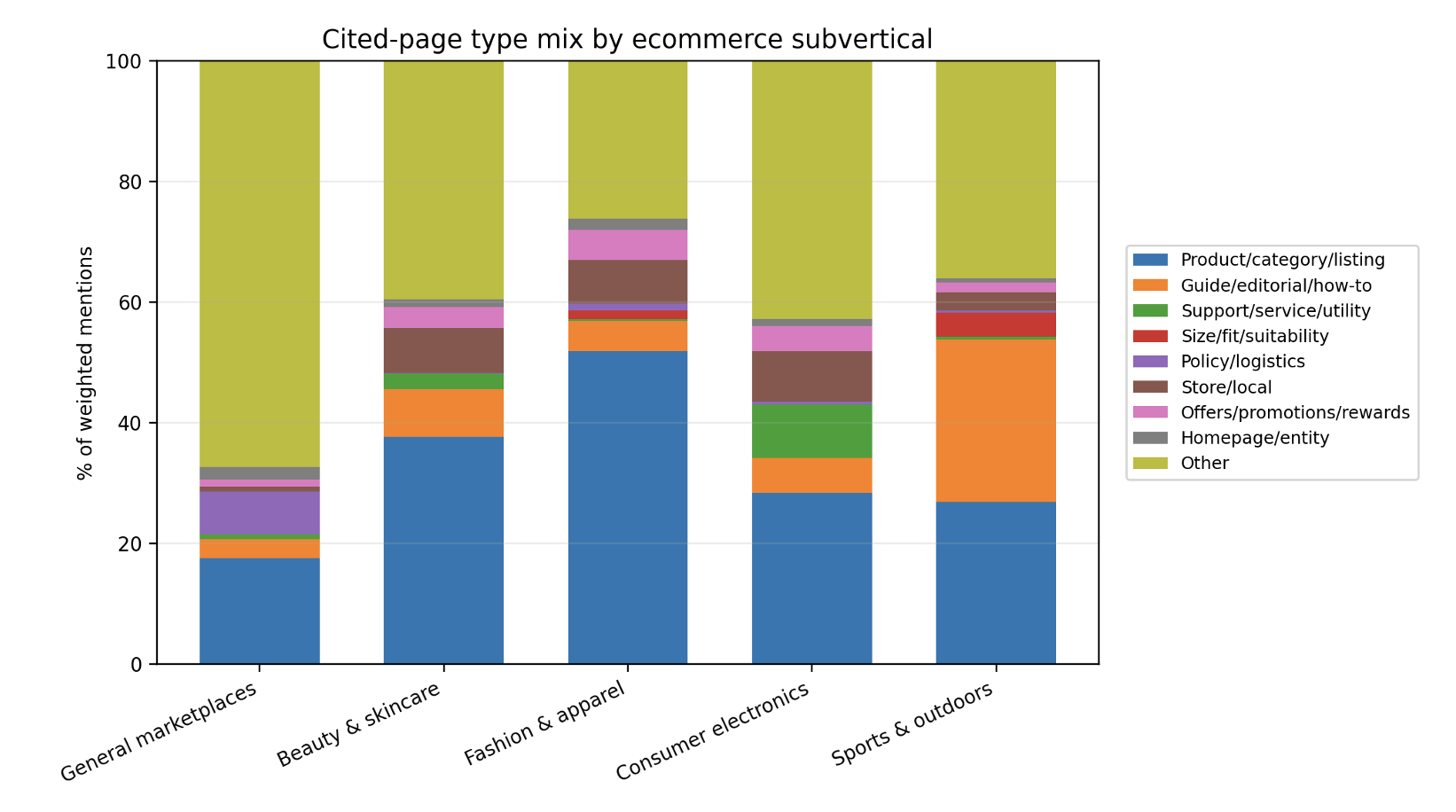
Figure 1. Cited-page type mix by ecommerce subvertical, using weighted cited page prompts_count from the analyzed data. Classifications are directional and rule-based.
The chart above shows the cited pages type split: Product/category/listing pages are still substantial, especially in beauty, fashion, and marketplaces, but support/service/utility, guide/editorial/how-to, size/fit/suitability, policy/logistics, store/local, and offers/promotions pages also appear across the dataset.
This is why ecommerce AI search audits should include support, policy, sizing, guide, offer, and store-location pages as first-class assets, rather than treating them as secondary content.
- If an AI system is answering “what size Nike shoes should I buy?”, the relevant asset may be a fit guide.
- If the prompt is “is this marketplace legit?”, the relevant assets may be policies, third-party reviews, community discussions, and entity information.
- If the prompt is “best hiking boots for beginners,” the relevant asset may be a buying guide or activity guide, not only a PDP.
The key shift: in AI search, commercially valuable citations can come from pages that reduce purchase risk, not only from pages that capture the transaction.
Pattern 2: A shared citation layer appears across ecommerce, but the role of each source changes by vertical
There are commonalities across the five subverticals: Owned ecommerce pages are the base, YouTube and Reddit appear across all five subverticals, Social platforms, expert/review media, reference/entity sources, and niche third-party sites also show up repeatedly.
But there are also important differences: YouTube can be a setup/tutorial source in electronics, a product review or routine source in beauty, a styling/demo source in fashion, and a gear use source in sports and outdoors. Reddit can validate product experience, expose complaints, compare alternatives, or troubleshoot product issues depending on the category.
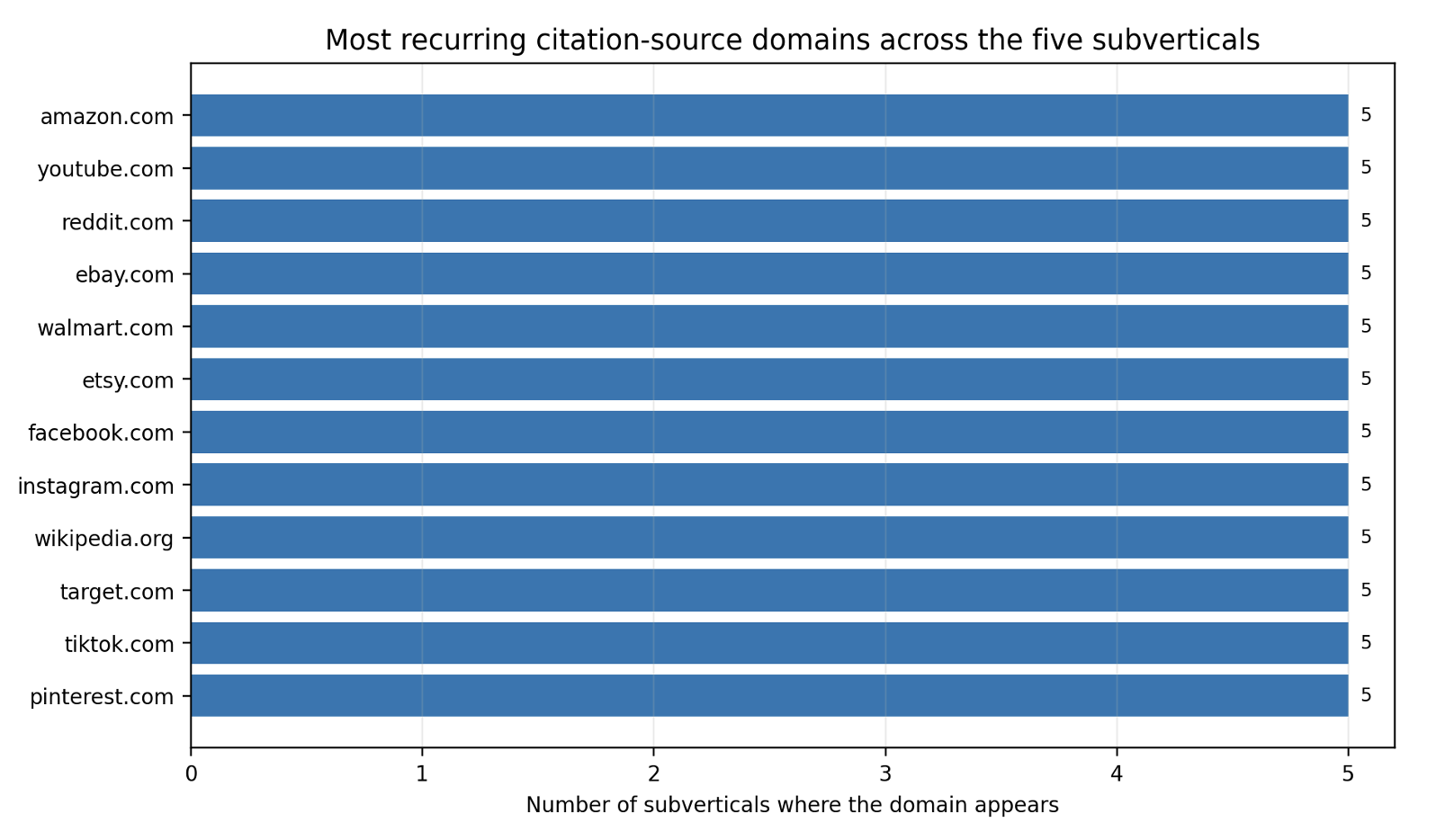
Figure 2. Most recurring citation-source domains across the five subverticals in the analyzed data.
The recurring domain pattern shows that ecommerce AI visibility is partly shaped outside the brand’s own domain. It’s then fundamental to understand where AI systems find corroboration in your category, whether those sources reinforce or contradict your own site, and where SEO, PR, community, and brand teams need to work together to strengthen accurate, differentiated representation.
| Domain | Appears in # subverticals | What it likely contributes |
|---|---|---|
| amazon.com | 5/5 | Marketplace/category coverage, availability, pricing context, alternatives, commercial destination signals. |
| youtube.com | 5/5 | Creator validation, reviews, demonstrations, comparisons, troubleshooting, real-world product use. |
| reddit.com | 5/5 | Community validation, user questions, complaints, comparisons, recommendations, troubleshooting. |
| ebay.com | 5/5 | Marketplace coverage, resale/used-product context, availability, pricing alternatives. |
| walmart.com | 5/5 | Retail availability, store/local context, category coverage, pricing/promotions. |
| etsy.com | 5/5 | Marketplace/category coverage, gifts, niche products, handmade/custom product context. |
| facebook.com | 5/5 | Social validation, local/social discovery, community or profile context. |
| instagram.com | 5/5 | Visual validation, style/product inspiration, creator/user discovery. |
| wikipedia.org | 5/5 | Entity, brand, category, or historical reference context in some cases. |
| target.com | 5/5 | Retail/category availability, alternatives, pricing context. |
| tiktok.com | 5/5 | Creator/user validation, trends, visual product discovery. |
| pinterest.com | 5/5 | Visual discovery, styling, ideas, inspiration-oriented shopping context. |
Pattern 3: The source mix changes according to the evidence AI systems need
A product category with high technical complexity doesn’t need the same evidence as a category driven by fit, style, or subjective suitability. This is where the source-type mix becomes useful:
- In consumer electronics, the dataset includes support, technical, review, video, and compatibility-oriented sources.
- In beauty and fashion, social, creator, community, review, and suitability signals become more relevant.
- In general marketplaces, the source ecosystem is broader because the AI may be validating the marketplace as an entity, shopping destination, seller platform, and logistics layer.
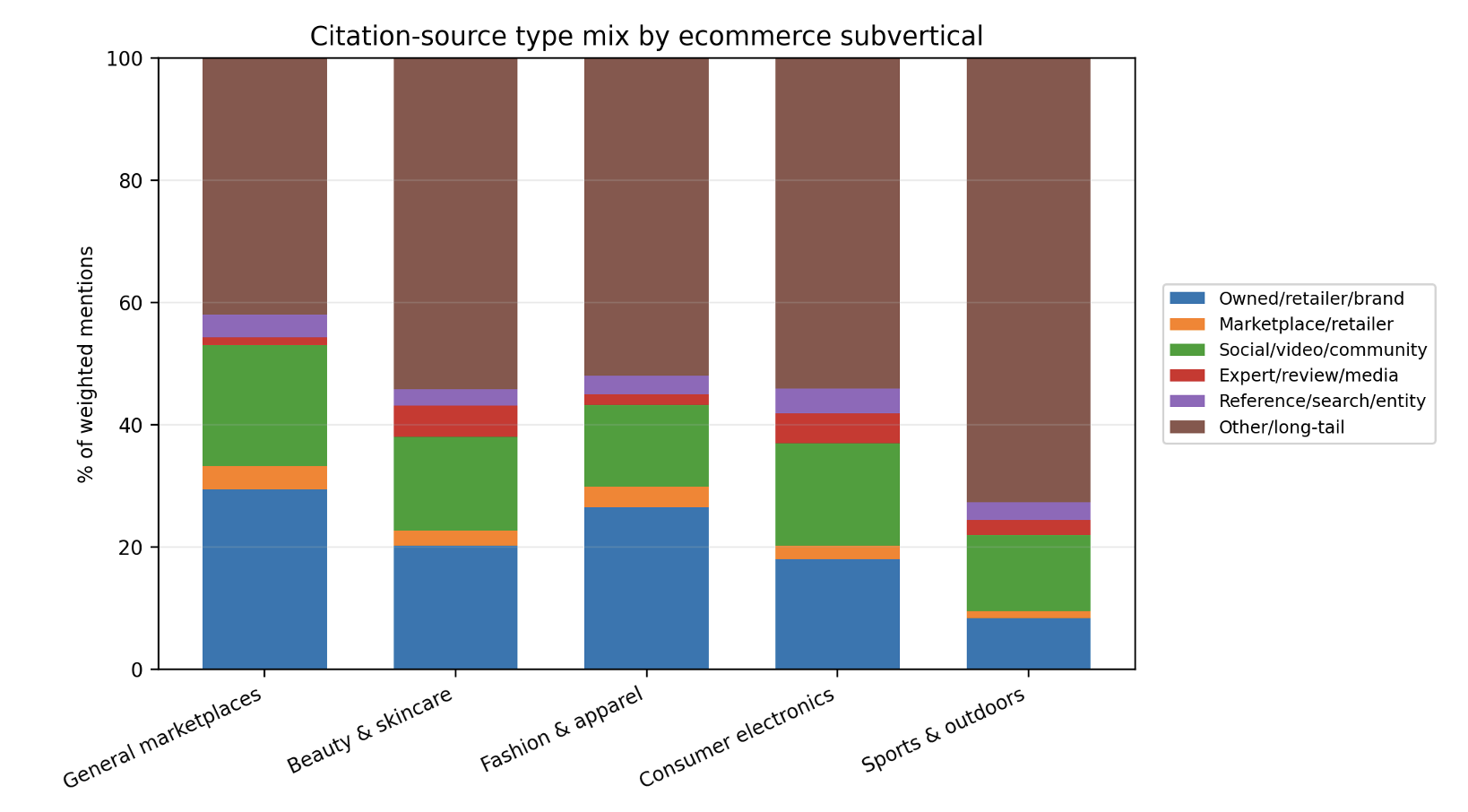
Figure 3. Source-type mix by ecommerce subvertical in the analyzed citation-source data. Classifications are directional and rule-based.
The chat shows that if a vertical has a higher third-party / community / media layer, the brand’s owned claims may need stronger external corroboration and if owned pages are heavily cited, the brand may already have useful canonical information, but that information still needs to be complete, accurate, extractable, and connected to user decision needs.
SEO specialists should map the evidence mix by category before recommending tactics. The right answer isn’t always to publish more content; sometimes it’s to fix support information, align product data, improve third-party validation, or make sizing/compatibility information extractable.
Pattern 4: Each subvertical has a different buyer uncertainty pattern
This is the most important strategic layer of the analysis: The five subverticals share a broad citation ecosystem, but they don’t share the same buyer uncertainty. That means the same AI search checklist will not be equally useful across categories: Beauty doesn’t have the same evidence need as electronics, fashion doesn’t have the same decision friction as general marketplaces, sports and outdoors isn’t only about products; it’s also about activity, skill level, environment, and preparation.
| Subvertical | Most visible uncertainty AI seems to resolve | Recurring citation assets | Optimization priority |
|---|---|---|---|
| General marketplaces | Trust, logistics, availability, policies, marketplace/entity understanding | Homepages, store pages, policies, offers, marketplace/category pages, social/community and reference sources | Make marketplace mechanics, trust, policies, and category coverage clearer and more extractable. |
| Beauty & skincare | Suitability by skin type, tone, concern, routine, ingredients, shade, user experience | PDPs, beauty education, routine/how-to guides, social/community, beauty media, reviews | Map product attributes to real suitability needs and strengthen educational + third-party evidence. |
| Fashion & apparel | Fit, sizing, style, occasion, returns, authenticity, resale confidence | Size guides, fit/style guides, return/shipping pages, resale/authentication pages, social/visual sources | Treat size/fit, returns, styling context, and authenticity as core AI-search assets. |
| Consumer electronics | Specs, compatibility, setup, repair, support, reliability, ownership risk | Support articles, repair/recycling pages, specs, buying guides, YouTube/Reddit, expert reviews | Strengthen extractable technical, support, compatibility, and comparison information. |
| Sports & outdoors | Activity context, skill level, gear selection, preparation, fit, maintenance | Gear guides, checklists, size guides, activity advice, YouTube/Reddit, specialist review sources | Own the activity/use-case context, not only the product page. |
The table above is the simplest way to translate the data into strategy: Start with the uncertainty, then identify the pages and sources that help resolve it. Only after that should you decide which pages, data fields, guides, support assets, or third-party sources need to be improved.
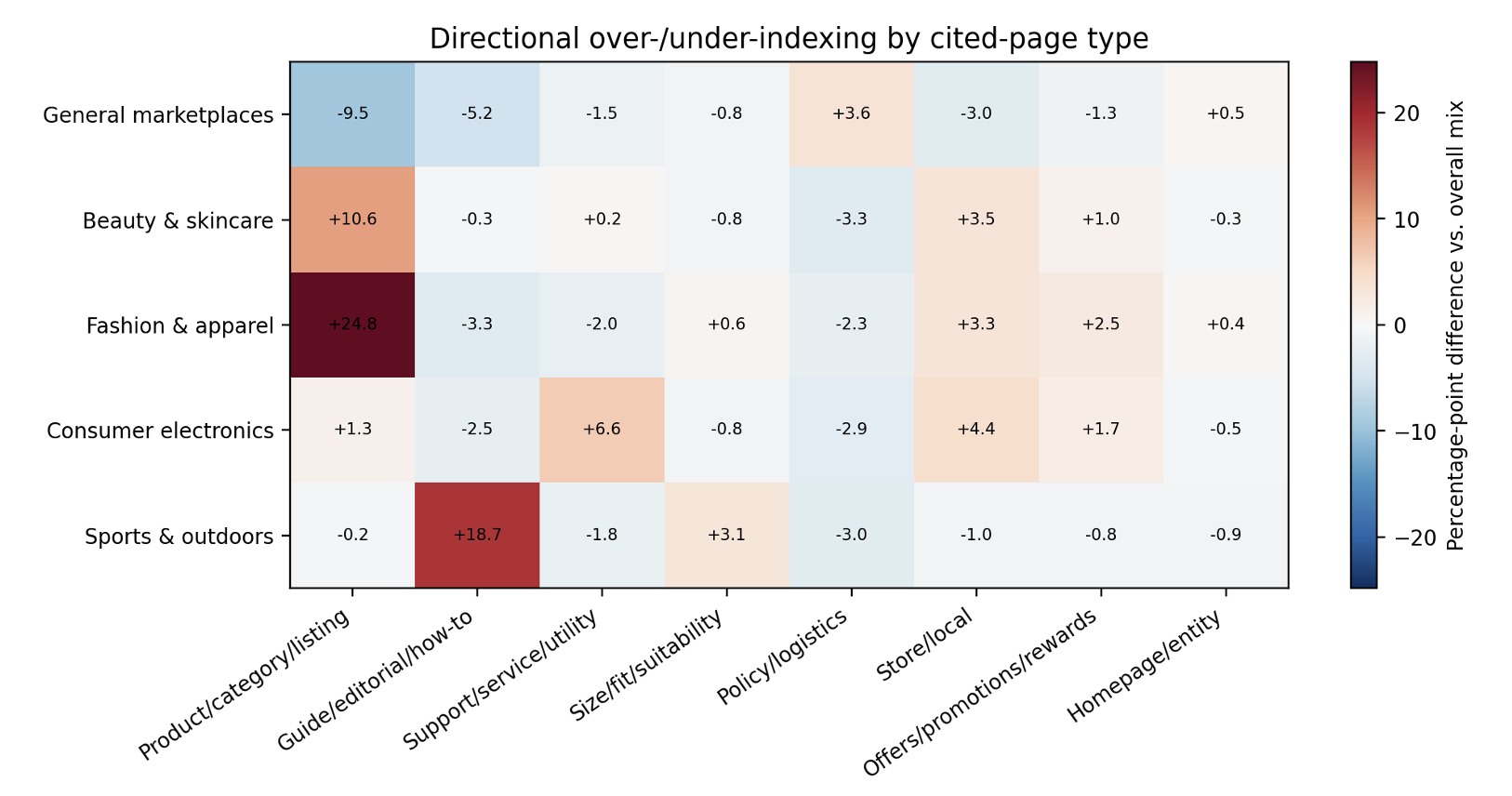
Figure 4. Directional over-/under-indexing by cited-page type across the analyzed subvertical data.
The heatmap reinforces the same point:
- Consumer electronics stands out around support/service/utility.
- Sports and outdoors stands out around guide/editorial/how-to and size/fit resources.
- Fashion has stronger size/fit, policy, store/local, and offer components than some other verticals.
- General marketplaces show a broader operational and product/category footprint.
These map back to how users evaluate risk and confidence in each category.
Pattern 5: General marketplaces are the only vertical where peers cite each other heavily
Within each subvertical, what share of a site’s external citation prompts comes from its four peers in the same vertical? The answer shows a structural difference between marketplaces and brand-retailers.
| Vertical | Mean peer-citation share | What it means |
|---|---|---|
| General Marketplaces | 16.4% | Strong intra-vertical comparison: AI cites Amazon when answering about Walmart, eBay when answering about Etsy, etc. Etsy alone draws 19.5% of its external citation prompts from the other four marketplaces. |
| Fashion & Apparel | 3.3% | Each retailer treated as a reasonably distinct entity by AI assistants. Poshmark is an exception, drawing 10.9% of its external citations from eBay (resale corroboration). |
| Consumer Electronics | 3.3% | Manufacturer and specialist-tech media do the corroboration work, not peers. T-Mobile is an exception, with carrier peers att.com and verizon.com holding ~5% of its external citations. |
| Beauty & Skincare | 2.9% | Same pattern, with a clear within-vertical exception: Ulta is Sephora’s #4 external source and Sephora is Ulta’s #6 — AI treats them as a paired comparison surface. |
| Sports & Outdoors | 2.8% | Competing-brand corroboration is in the data but small in share; specialist gear-review media does most of the corroboration work. |
This means marketplace and brand-retailer AI search optimization are different category problems:
- General marketplaces function as a marketplace ecosystem in AI search: each marketplace counts the others among its top external sources by a meaningful margin.
- For brand-retailers, peer corroboration is real but small – specialist media, manufacturer sites, marketplaces, and social/community sources do most of the work.
Marketplaces fight for visibility on a shared comparison surface that explicitly includes their peers. Brand-retailers fight for visibility within a more specialized network of specialist media, manufacturers, and a long tail of niche corroborators. The two shouldn’t share a playbook.
Pattern 6: Even category leading retailers hold a minority share of citations about themselves
Among the sites in the dataset where the source includes the site’s own domain in the citation list, what share of the total citation prompts about each site goes to the site itself versus third parties? Even category leaders usually hold only a minority share of the AI citation prompts about themselves, often in the single digits and, in this dataset, mostly below 15%.
| Tier | Own-domain share | Sites |
|---|---|---|
| Highest (general marketplaces) | 12–17% | etsy.com (17.1%), ebay.com (14.2%), walmart.com (14.2%), amazon.com (12.5%); temu.com is a clear outlier at 2.5%. |
| Mid (large retailers) | 7–11% | macys.com (11.2%), bestbuy.com (11.1%), backmarket.com (9.9%), ulta.com (9.8%), poshmark.com (9.4%), nordstrom.com (9.4%), bhphotovideo.com (9.2%), ipsy.com (9.0%), t-mobile.com (7.6%), sephora.com (7.4%). |
| Lower | 4–7% | shein.com (6.8%), gap.com (4.5%). |
| Very low | <3% | sony.com (2.1%), temu.com (2.5%) — for both, AI cites third parties about them more than their own site. |
This reframes how ecommerce AI search visibility should be approached: The on-site work is important because it determines whether your own pages get pulled in when AI cites you – page-type mix, content depth, crawlability, structured data, but the volume battle is decided by the third-party layer.
AI search visibility for ecommerce is structurally an off-site corroboration problem with an on-site quality floor – not the inverse. Even the most established brands and retailers in the dataset usually hold a minority share of the AI citation prompts about themselves, with only a few reaching the low-to-mid teens and Etsy reaching 17.1%.
Pattern 7: AI citation visibility and Gen AI traffic are not the same signal
The citation analysis shows which pages and sources AI systems appear to use as evidence. The AI traffic data adds a different question: which owned pages users actually visit after interacting with AI platforms?
Across the analyzed Gen AI traffic exports, the traffic-driving page mix is more owned-site and often more transactional than the citation layer. Product/detail pages, category/search/listing pages, homepages, size/fit pages, support or eligibility pages, and selected guides appear prominently depending on the subvertical.
The key distinction is that citation and click value are not the same: some pages act as evidence assets, they help the AI answer confidently but may not receive many clicks because the answer satisfies the user in-platform; while other pages act as click assets, they’re the natural next step when the user wants to compare, buy, verify availability, check size, confirm eligibility, or complete a task.
This is why AI traffic should be interpreted through both prompt intent and answer format:
- Transactional prompts are more likely to drive clicks when the AI answer includes product cards, merchant links, price/availability information, or comparison surfaces.
- Informational prompts may cite guides, support content, or third-party sources without creating the same click behavior.
- Navigational prompts can drive visits to homepages, store pages, search pages, or brand/entity pages, even if those pages are not the richest evidence source.
To compare this click layer with the earlier citation layer, I classified the Gen AI traffic URLs using the same broad page-type categories where possible.
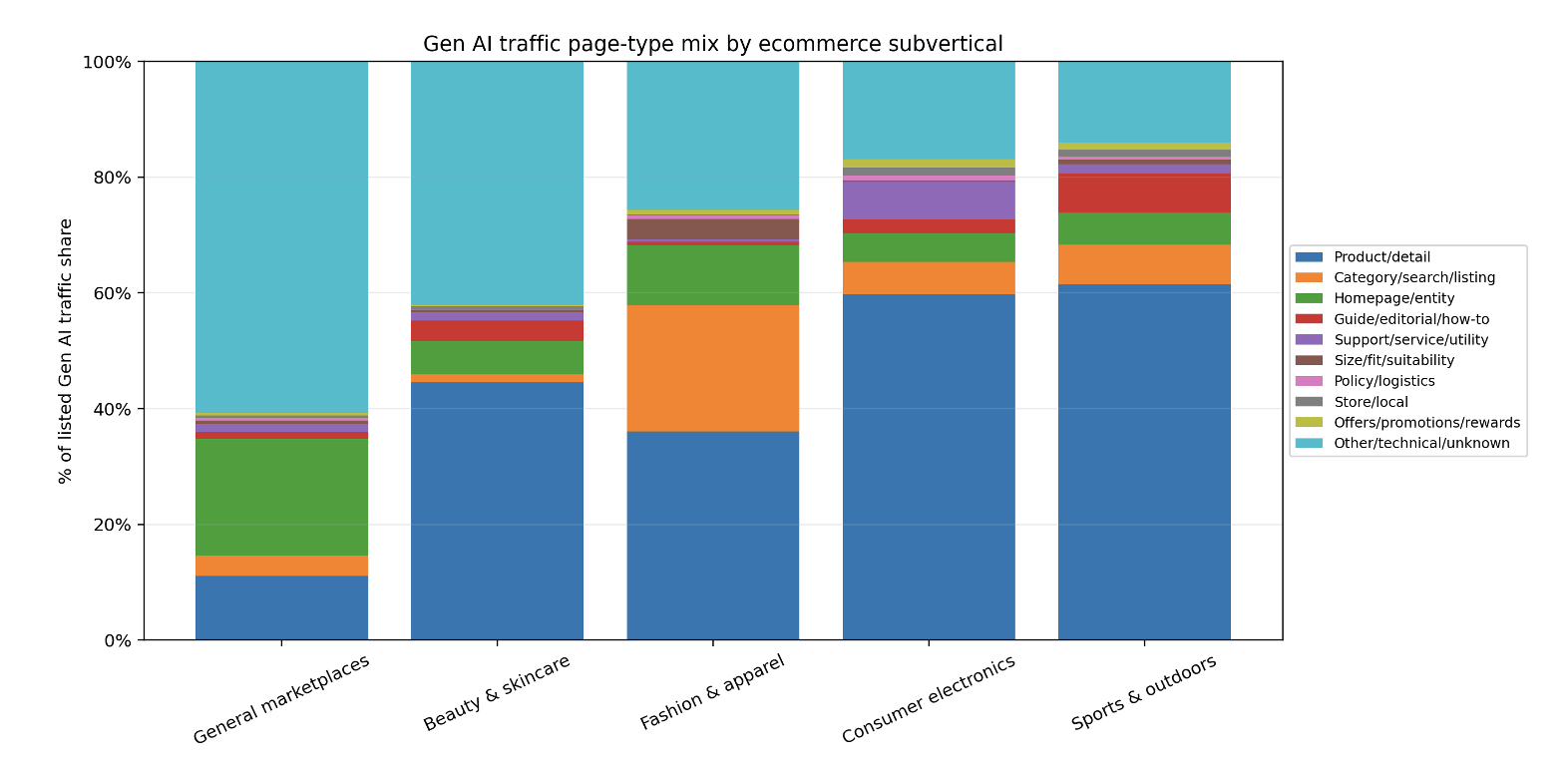
Figure 5. Gen AI traffic page-type mix by ecommerce subvertical, using deduplicated URL traffic share from the analyzed exports. URL shares are normalized within each site and averaged by subvertical. Classifications are directional and rule-based.
The chart shows that Gen AI traffic isn’t only going to PDPs and PLPs, but the traffic layer is more transactional than the citation layer. Product/detail pages are especially visible in consumer electronics, fashion and apparel, beauty and skincare, and sports and outdoors. General marketplaces show a broader mix of product, homepage/entity, search/category, and other/technical surfaces.
Product/detail pages are the largest traffic-driving layer in beauty and skincare, consumer electronics, fashion and apparel, and sports and outdoors.
However, the supporting layers differ: fashion still has a visible size/fit and homepage/entity component; consumer electronics retains support/service/utility pages; sports and outdoors keeps guide/activity and size/fit assets in the mix; and general marketplaces remain more distributed across marketplace, category/search, homepage/entity, and transactional surfaces.
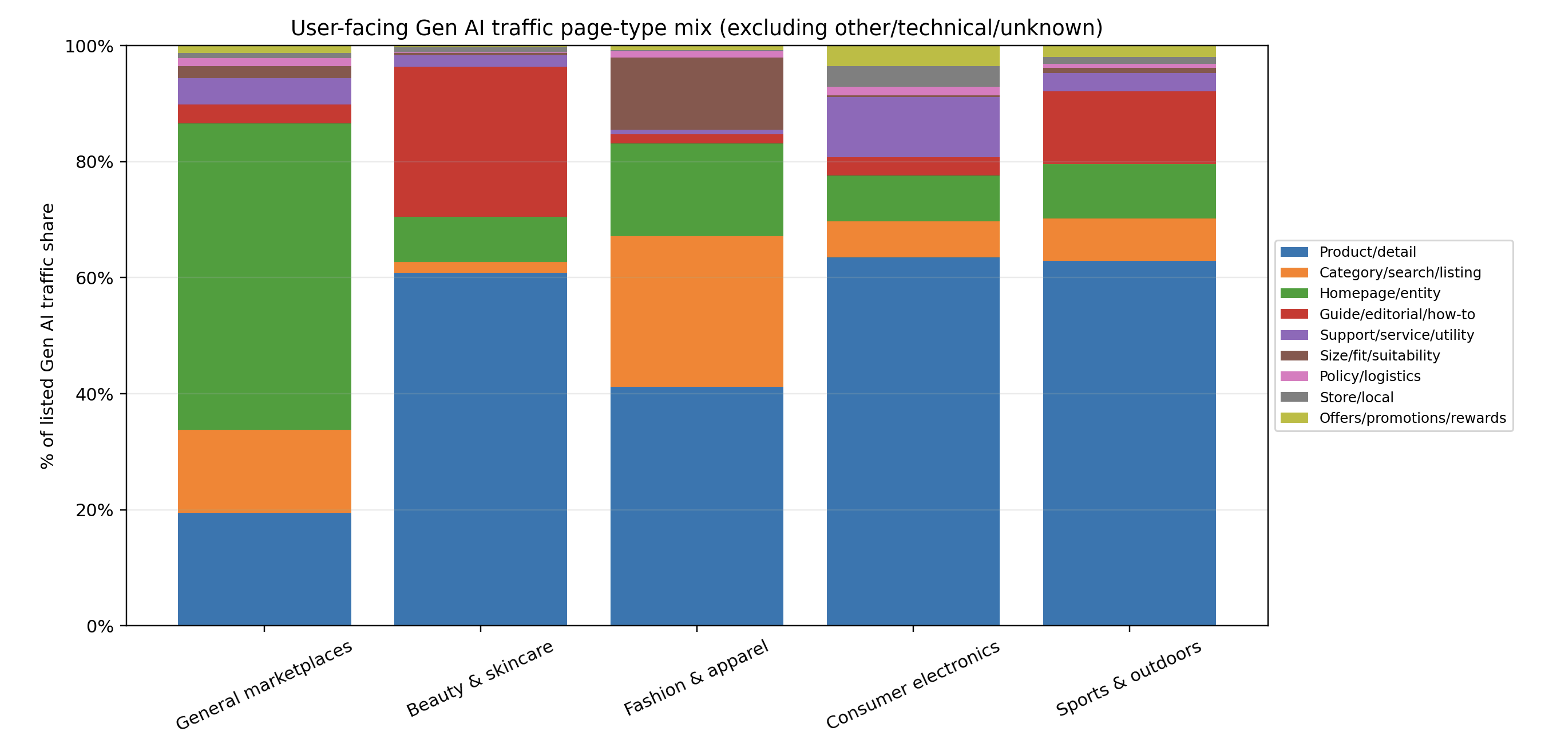
Figure 6. User-facing Gen AI traffic page-type mix by ecommerce subvertical, excluding other/technical/unknown URLs and then normalizing within each site. This chart is useful for interpreting the traffic layer through pages users are more likely to intentionally visit.
What the Gen AI traffic data adds by ecommerce subvertical
The same overall traffic pattern plays out differently by subvertical. This is where the analysis becomes more actionable: the Gen AI traffic data doesn’t just show that users click through to owned ecommerce pages, but which types of pages become the most useful next step depending on the category, the likely prompt intent, and the format of the AI answer.
In some subverticals, Gen AI traffic reinforces a more transactional journey, with product and category pages becoming the clearest continuation point. In others, support, sizing, homepage/entity, guide, or marketplace surfaces remain visible because they help users validate fit, eligibility, trust, availability, or use-case suitability before taking action.
The table below summarizes what the Gen AI traffic layer adds to each subvertical, and how it reinforces or nuances the citation patterns identified earlier.
| Subvertical | What the Gen AI traffic data adds | How it changes or reinforces the citation analysis |
| General marketplaces | Traffic is more navigational, entity-led, marketplace-led, and product/listing-led than the citation layer. Homepages, search/category pages, listings, cart/account/challenge-type pages, and some technical URLs appear prominently. | Reinforces that marketplaces are evaluated as destinations and operating systems, not only as product collections. However, the traffic layer is more owned-site and navigational/transactional than the broader citation layer. |
| Beauty & skincare | Product/detail pages are a strong user-facing traffic layer, especially where users are likely to continue toward product evaluation or purchase. Some exports include a high “other/unknown” component, so the traffic pattern should be interpreted carefully. | Supports the need to optimize PDPs and suitability evidence together. AI may cite broader routine, review, creator, and education sources, but clicks often go to product pages when the user wants the next step. |
| Fashion & apparel | Product/detail pages are the strongest traffic layer, with visible homepage/entity, category/search, and size/fit components. | Reinforces that fashion AI traffic is still highly product-led, while fit, sizing, returns, styling, and authenticity remain important decision-support assets. |
| Consumer electronics | Product/detail pages dominate the traffic layer, but support/service/utility pages remain visible, including coverage, eligibility, support software, specs, and device pages. | Confirms that electronics has a dual traffic pattern: commercial product evaluation and technical/support validation. Specs, compatibility, setup, warranty, and support still matter. |
| Sports & outdoors | Traffic is more distributed across product pages, activity/use-case pages, guide/editorial assets, size/fit resources, homepage/entity pages, and some other/technical rows. | Strongly reinforces that sports and outdoors is use-case driven. The category isn’t only about products, but about activity, skill level, gear choice, environment, and preparation. |
Pattern 8: Gen AI traffic is long-tail, but concentration varies by vertical and site
The Gen AI traffic data also shows that the click layer isn’t equally concentrated across ecommerce, some verticals have a small number of URLs capturing a large share of listed Gen AI traffic, while others have a more distributed long tail, so a fixed rule such as “optimize the top 10 AI traffic pages” will work better in highly concentrated environments than in long-tail ones. In more distributed verticals, auditing only the top few pages will miss many relevant AI search journeys.
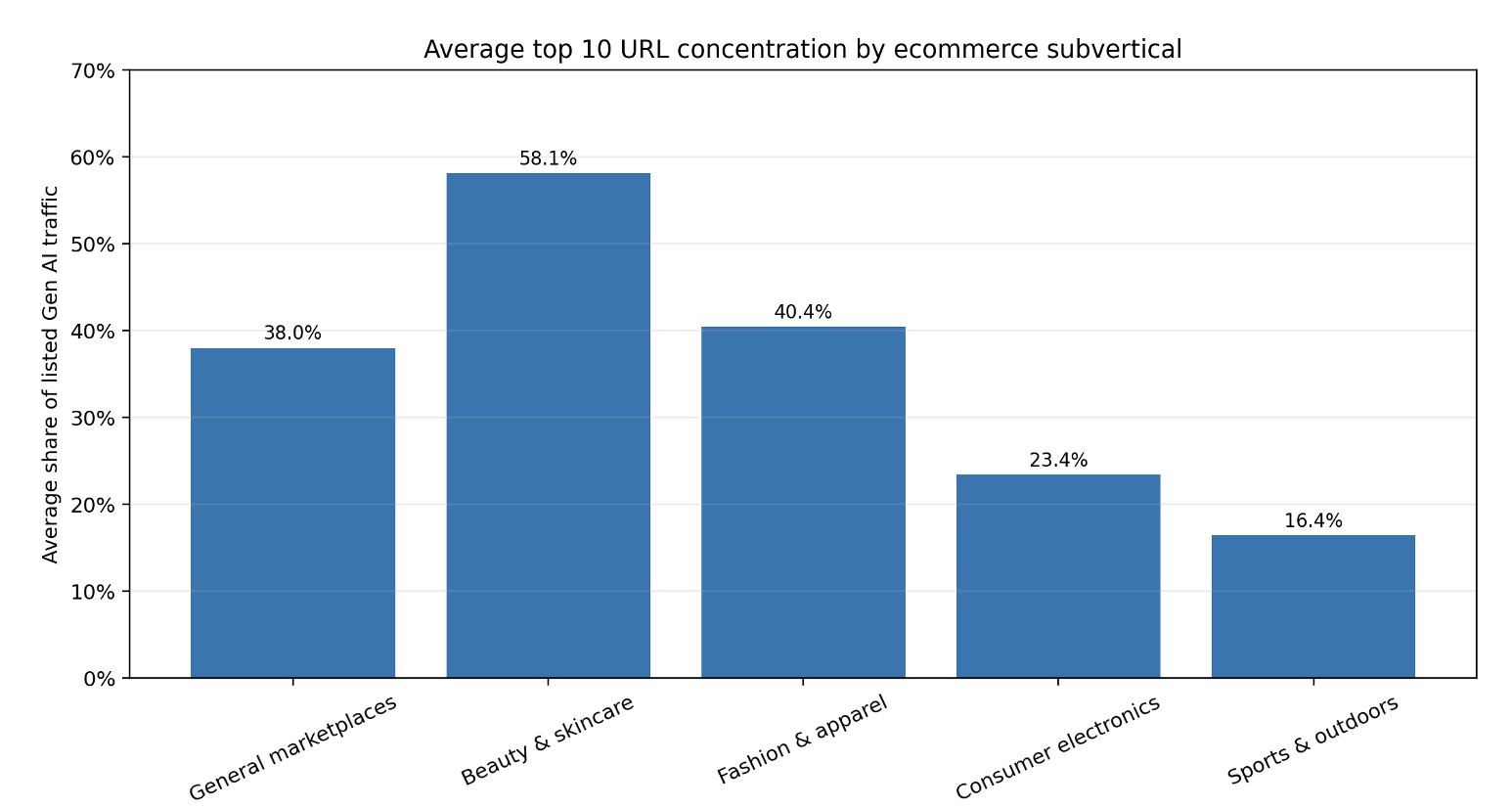
Figure 7. Average share of listed Gen AI traffic held by the top 10 URLs in each subvertical. Calculated from deduplicated URLs within each site, then averaged across the five sites in the subvertical.
The top 10 URL concentration varies meaningfully: Sports and outdoors is the most distributed in this dataset, while beauty and skincare is the most concentrated, although that beauty/skincare concentration is partly affected by less interpretable rows and smaller URL sets in some exports.
Interpretation: the listed URL share sum reflects how much of each site’s reported Gen AI traffic is represented by the exported URLs. Some exports cover the full listed traffic surface, while others represent only a partial page sample, so these concentration figures should be used directionally rather than as full-market coverage metrics.
| Subvertical | Avg. unique URLs listed | Avg. listed URL share sum | Top 10 | Top 20 | Top 50 |
| General marketplaces | 812 | 59.7% | 38.0% | 42.8% | 50.8% |
| Beauty & skincare | 88 | 100.0% | 58.1% | 67.1% | 76.6% |
| Fashion & apparel | 500 | 62.8% | 40.3% | 47.7% | 57.3% |
| Consumer electronics | 979 | 54.3% | 22.6% | 27.6% | 37.1% |
| Sports & outdoors | 899 | 66.7% | 16.3% | 21.8% | 34.1% |
Because listed URL coverage varies by site, the concentration comparison is most useful for prioritization within each subvertical, not as a precise cross-market traffic-share benchmark.
The most important similarities and differences
Although there are shared patterns across ecommerce, the vertical specific differences are big enough to change the actual recommendations.
The shared pattern is that AI systems in this dataset use a mixed evidence layer, while users tend to click through to owned pages that help them continue the journey, but the balance between evidence assets and click assets changes by subvertical.
In some categories, the citation layer is broader than the traffic layer: AI systems may cite guides, support pages, communities, expert media, or policy content, while users click through to PDPs, PLPs, category pages, or homepages. In others, especially where support, fit, compatibility, or activity context matters, decision-support pages remain visible in both citations and traffic.
That means that we should ask about which evidence sources AI systems use, as well as which page types become the most useful next step for the user after the AI answer.
| Dimension | Common pattern across ecommerce | How subverticals differ | Practical implication |
|---|---|---|---|
| Owned pages | Owned pages are repeatedly cited and also receive Gen AI traffic, but not only PDPs/PLPs. | The traffic layer is more product/detail-led in beauty, fashion, electronics, and sports; general marketplaces show a broader navigational, marketplace, homepage/entity, and category/search mix. | Audit both citation visibility and Gen AI traffic by page type. Prioritize pages that are both cited and visited, while still improving evidence-only assets that shape AI answers. |
| Third-party validation | YouTube, Reddit, marketplaces, expert/review media, social platforms, and other third-party sources recur across the citation layer. | These sources influence answers differently by category: electronics and sports lean more on expert/review and technical validation; beauty and fashion rely more on creator, community, review, and suitability signals. | Build a vertical-specific off-site corroboration strategy, but don’t expect every third-party citation source to drive direct traffic. Some sources influence representation more than clicks. |
| Product/detail pages | PDPs remain important, especially in the Gen AI traffic layer. | Product/detail pages are especially visible in consumer electronics, fashion and apparel, beauty and skincare, and sports and outdoors traffic data. | Do not interpret “beyond PDPs” as “PDPs matter less.” PDPs still need strong product data, crawlability, structured data, conversion support, and consistency with guides, feeds, and third-party claims. |
| Guides/how-to | Guides appear as AI-citable assets when they resolve decision friction. | Sports and beauty show stronger advice/use-case patterns; electronics uses buying and technical guides; fashion uses style and fit guidance. In traffic data, guides are more visible in some verticals than others depending on prompt intent and answer format. | Treat guides as decision-support assets, not generic blog content. Connect them to relevant products/categories and evaluate whether they work as evidence assets, click assets, or both. |
| Support/policies | Support, policy, store, repair, and logistics pages can be highly visible in the citation layer and, in some cases, the traffic layer. | Electronics retains visible support/service/utility traffic; fashion has fit, returns, shipping, and authenticity needs; marketplaces rely on policy/logistics/trust clarity; sports uses sizing, maintenance, and gear advice. | Make utility content crawlable, current, specific, internally linked, and consistent with product and commercial pages. These pages may reduce purchase risk even when they don’t directly convert. |
| Product data | Complete, extractable product information matters in every vertical. | The critical attributes change: ingredients, shades, and skin concerns for beauty; material, fit, sizing, and returns for fashion; specs and compatibility for electronics; terrain, skill level, activity, and sizing for sports. | Customize product attributes by vertical and buyer uncertainty. Align PDPs, feeds, structured data, support pages, guides, and third-party claims. |
| Prompt intent and answer format | Gen AI traffic is shaped by what the user asks and how the AI answer presents next steps. | Transactional prompts can drive clicks to PDPs/PLPs when product cards, merchant links, prices, or comparison surfaces appear. Informational prompts may cite guides or third-party sources without many visits. Navigational prompts can drive homepages, store pages, or search/category pages. | Don’t analyze Gen AI traffic as a pure page-quality signal. Interpret it alongside prompt intent, answer format, platform behavior, and user journey stage. |
| Traffic concentration | Gen AI traffic is long-tail, but the concentration curve varies by vertical and site. | Sports and outdoors and consumer electronics are more distributed in the analyzed traffic data; beauty and skincare appears more concentrated, though with caveats due to smaller/less interpretable URL sets. | Avoid a fixed “optimize the top 10 pages” rule. The monitoring and optimization depth should match the subvertical’s traffic and citation concentration curve. |
This shows why you shouldn’t follow a generic ecommerce AI search checklist, but start from the buyer’s needs and common uncertainty in your own subvertical, then map both layers around it: the evidence layer AI systems use to answer the prompt, and the click layer users follow when they need to continue the journey.
In practice, this means auditing PDPs, PLPs, feeds, structured data, guides, support pages, policies, third-party sources, and traffic-driving owned pages together, not as separate SEO, content, PR, support, and merchandising workstreams.
Subvertical specific findings and recommendations
The following sections translate the shared citation and Gen AI traffic patterns into vertical specific action. Each recommendation is based on what appeared in the analyzed citation-source, cited-page, and Gen AI traffic data, but it should still be validated against each brand’s own prompts, competitors, products, markets, analytics, and AI traffic sources.
The goal isn’t only to identify which pages and sources AI systems use as evidence, but also which owned pages users visit when they continue the journey from AI platforms.
1. General marketplaces
General marketplaces have the broadest and most varied citation ecosystem in the dataset. That’s expected: AI systems may need to understand not only products, but the marketplace as an entity, a logistics layer, a seller ecosystem, a discount environment, a local/store resource, and a trust destination.
What the citation and Gen AI traffic data suggests
Homepages, marketplace/category pages, seller pages, store pages, policies, coupons, membership/help pages, and social/reference sources all appear as relevant citation assets. Compared with narrower ecommerce categories, the uncertainty is less about one product and more about whether the marketplace is useful, legitimate, reliable, well-stocked, and operationally clear.
The Gen AI traffic layer reinforces this, but with a more owned-site and navigational/transactional pattern. General marketplaces show traffic to homepages, search/category pages, listings, cart/account/challenge-type pages, and some technical URLs. This suggests that when users click from AI platforms, they are often moving toward broad marketplace exploration, product discovery, account or checkout-related actions, or validation of the marketplace as a destination.
What to prioritize
- Clarify what the marketplace is, what it sells, how it works, and what makes it trustworthy.
- Make seller/buyer policies, shipping, returns, coupons, membership benefits, and local/store services easy to crawl, understand, and connect to relevant commercial journeys.
- Maintain category/search/listing pages that explain product breadth, availability, pricing context, and comparison value.
- Audit homepage, category/search, listing, store, account/cart, and technical surfaces that receive Gen AI traffic to ensure they provide a clean continuation path from AI platforms.
- Monitor third-party reputation and community validation for legitimacy, pricing, shipping, quality, and customer experience prompts.
- Separate true user-facing traffic pages from technical, challenge, account, or cart-related URLs when prioritizing optimization.
2. Beauty & skincare
Beauty and skincare is highly suitability-driven. A product can be technically available and still be a poor fit for the user’s skin type, tone, concern, age, routine, scent preference, or ingredient sensitivity. The citation pattern reflects that complexity.
What the citation and Gen AI traffic data suggests
PDPs are important, but they sit alongside beauty education, routine content, how-to guides, social/video/community sources, beauty media, specialist sources, and review ecosystems. AI platforms appear to rely on evidence that connects product attributes to personal suitability: skin type, shade, undertone, finish, concern, ingredient, formulation, routine step, and alternatives.
The Gen AI traffic layer adds a more transactional nuance: product/detail pages are a strong user-facing traffic layer, especially when the user is likely to continue toward product evaluation or purchase. In other words, AI systems may use a broader evidence layer to answer suitability, routine, review, and ingredient-related prompts, but users often click through to product pages when they want the next step.
Some beauty and skincare exports include a high “other/unknown” component, so the traffic pattern should be interpreted carefully and validated at site level before drawing hard conclusions.
What to prioritize
- Expand PDP attributes around skin type, concern, finish, shade, undertone, ingredients, formulation, fragrance family, routine step, and alternatives.
- Connect product pages with educational content around real suitability questions, not generic blog topics.
- Treat PDPs as both traffic assets and evidence assets: they need to be accurate, extractable, current, and consistent with guides, feeds, structured data, reviews, and third-party claims.
- Build routine, comparison, and suitability content that helps AI systems resolve pre-purchase uncertainty, then link it clearly to relevant products and categories.
- Strengthen creator, review, Reddit, TikTok/YouTube, beauty media, and community corroboration.
- Validate “other/unknown” or ambiguous Gen AI traffic rows before using them for prioritization.
3. Fashion & apparel
Fashion and apparel is visual, fit-sensitive, and trust-sensitive. The buyer’s uncertainty is rarely only “where can I buy this?” It’s also “will it fit?”, “will it look good?”, “can I return it?”, “is it authentic?”, and “is this the right style for the context?”
What the citation and Gen AI traffic data suggests
The current citation data shows strong relevance for size guides, fit content, return/shipping pages, styling guidance, store/local pages, resale/authentication assets, marketplaces, and visual/social sources. This makes fashion one of the clearest cases where support-style content can be commercially important for AI visibility.
The Gen AI traffic layer shows that fashion is still highly product-led: product/detail pages are the strongest traffic layer, with visible homepage/entity, category/search, and size/fit components. This means “going beyond PDPs” should not be interpreted as “PDPs are less important” In fashion, PDPs often become the click destination, while size, fit, returns, styling, authenticity, and social proof help shape confidence before that click.
What to prioritize
- Treat product/detail pages as priority Gen AI traffic assets: improve product data, imagery, sizing, availability, material, fit guidance, returns information, and conversion support.
- Treat size and fit pages as primary AI-search assets, not support leftovers.
- Create style, occasion, body-type, material, season, and trend guides that map user needs to products and categories.
- Make shipping, returns, and authenticity information clear, crawlable, and internally linked from PDPs, PLPs, and guide content.
- Use visual/social/creator content to corroborate product fit, quality, styling, and real-world use.
- Audit whether size/fit and return pages are acting as evidence-only assets, traffic assets, or both, then prioritize accordingly.
4. Consumer electronics
Consumer electronics has the clearest support and expertise pattern. The purchase decision is technical, comparison-heavy, and post-purchase sensitive. Users need to know whether something is compatible, reliable, repairable, supported, and worth the trade-off against alternatives.
What the citation and Gen AI traffic data suggests
Support articles, repair/recycling pages, setup and compatibility content, product specs, buying guides, YouTube, Reddit, and expert tech media all appear as important parts of the evidence layer.
The Gen AI traffic layer confirms a dual pattern: product/detail pages dominate traffic, but support/service/utility pages remain visible, including coverage, eligibility, support software, specs, and device pages. This means consumer electronics AI search journeys are often both commercial and technical. Users may click to evaluate a product, but also to confirm compatibility, eligibility, setup requirements, support options, warranty, repairability, or ownership risk.
This is the subvertical where inconsistent product information can be especially risky because specs, compatibility, model names, warranty terms, and support details directly influence both the AI answer and the user’s next step.
What to prioritize
- Make specs, compatibility, setup, troubleshooting, warranty, repairs, recycling, trade-in, eligibility, and coverage information complete and consistent.
- Treat PDPs and support pages as connected assets: users may move from AI answers to either, depending on whether the prompt is transactional, comparative, support-led, or eligibility-led.
- Build product comparison and buying guides that explain trade-offs clearly.
- Align PDPs, feeds, structured data, support pages, manufacturer information, and review/creator claims.
- Audit support/service/utility pages that receive Gen AI traffic for freshness, internal linking, conversion paths, and consistency with product pages.
- Invest in expert reviews and video demonstrations that validate product use cases accurately.
5. Sports & outdoors
Sports and outdoors is strongly use-case driven. The buyer is often not just choosing a product; they are choosing gear for an activity, environment, skill level, age, weather condition, terrain, or preparation need.
What the citation and Gen AI traffic data suggests
Activity guides, gear checklists, size/fit resources, buying guides, product guidance, YouTube/Reddit, sport-specific media, outdoor review sites, and retailer/brand pages all appear in the citation layer. The strongest opportunity is to own the activity context, not only the product detail page.
The Gen AI traffic layer reinforces this use-case-driven pattern. Traffic is more distributed across product pages, activity/use-case pages, guide/editorial assets, size/fit resources, homepage/entity pages, and some other/technical rows. This suggests that users coming from AI platforms may be at different stages of the journey: choosing a product, understanding what gear they need, validating sizing, preparing for an activity, or comparing options by skill level, terrain, weather, age, or use case.
Sports and outdoors is therefore one of the clearest examples where the AI search opportunity is not only to optimize products, but to connect products with activities, preparation, fit, and real-world use.
What to prioritize
- Own activity contexts such as hiking, camping, running, training, team sports, beginner use cases, weather, terrain, age, and skill level.
- Create gear guides, checklists, sport-specific buying guides, maintenance content, and fit/sizing resources.
- Connect advice content directly to relevant products and categories so guide traffic can continue into commercial journeys.
- Treat product/detail pages as click assets, but support them with activity, guide, and sizing content that helps AI systems resolve uncertainty.
- Strengthen expert/community/creator validation around real use, durability, performance, and suitability.
- Monitor the long-tail of Gen AI traffic more carefully in this vertical, since the traffic layer appears more distributed than in more concentrated categories.
So what should ecommerce AI search specialists actually do?
The implication is to audit both the evidence layer AI systems use to answer commercial prompts and the click layer users follow after interacting with AI platforms. This means mapping the relevant topics across the customer journey, identifying which sources are cited, which owned pages receive Gen AI traffic, and how prompt intent and answer format influence whether users click.
That evidence layer includes owned pages, product data, feeds, structured data, support information, guides, policies, social/video/community sources, expert reviews, marketplace pages, and entity signals.
The priority should be based on where the evidence is weak, inconsistent, inaccessible, or missing for commercially important prompts.
| Pattern found in the data | What to optimize | Priority by subvertical |
|---|---|---|
| Decision-support pages are frequently cited | Improve size guides, support articles, return/shipping pages, store locators, repair/recycling pages, offers, buying guides, checklists. | All; especially electronics, fashion, sports. |
| Third-party sources recur across verticals | Monitor and improve representation in YouTube, Reddit, expert media, creator content, marketplaces, and niche communities. | All; especially beauty, electronics, sports, fashion. |
| Page types vary by category uncertainty | Build prompt libraries around buyer friction: fit, compatibility, use case, legitimacy, returns, alternatives, budget, beginner needs. | All, with prompt sets customized by vertical. |
| Owned data needs corroboration | Align product feeds, PDPs, structured data, support pages, guides, manufacturer information, marketplace listings, and third-party claims. | All; critical in electronics and beauty where wrong attributes can mislead. |
| Utility content is commercially important | Integrate SEO, merchandising, content, support, PR, and product data teams around pages that reduce purchase risk. | All; strongest immediate wins where utility content already exists but is hard to find/extract. |
Once the evidence layer and traffic layer have been mapped, the next step is prioritization.
Not every cited page will drive traffic, and not every traffic driving page will be one of the most visible citation assets. That doesn’t make either signal less useful; it means they answer different questions. Citations help identify which pages influence AI answers, while Gen AI traffic helps identify where users continue their journey.
The matrix below helps classify pages based on both signals, so SEO and ecommerce teams can decide which assets to audit first, which ones still matter for brand representation, and which ones may show hidden AI search opportunities.
| Citation + traffic pattern | What it means | How to act |
| High citation visibility + high Gen AI traffic | Strategic AI search assets | These pages are both evidence assets and click assets. Audit them first for accuracy, freshness, crawlability, extractability, internal linking, conversion support, product data consistency, and representation quality. |
| High citation visibility + low Gen AI traffic | Evidence or answer-satisfied assets | These pages may influence the AI answer, recommendation, or brand representation even if they do not attract many visits. Improve them for factual accuracy, clarity, corroboration, and consistency with commercial pages. |
| Low citation visibility + high Gen AI traffic | Hidden traffic opportunities | These pages may reveal platform-specific click behavior, transactional answer formats, navigational journeys, or prompts not well represented in the citation dataset. Investigate the prompts and assistant sources driving them. |
| Low citation visibility + low Gen AI traffic | Lower immediate priority, unless strategically important | Do not ignore them if they support compliance, trust, support, product experience, or high-value journeys, but prioritize after higher-impact evidence and click assets. |
Practical optimization steps to follow:
- Map decision stage prompts by vertical: suitability, fit, trust, compatibility, returns, use case, alternatives, budget, beginner needs, and post-purchase support.
- Identify which sources are cited today: owned pages, competitors, marketplaces, YouTube, Reddit, expert media, niche sources, PDFs, support articles, policies, or guides.
- Classify cited pages by function: transaction, comparison, policy, support, sizing, guide, store/local, offer, social proof, or entity validation.
- Find evidence gaps: pages that should answer the prompt but are missing, weak, outdated, hard to crawl, or contradicted by third-party sources.
- Fix consistency and extractability first: feeds, PDPs, schema, support pages, policies, and guide content should not tell different stories.
- Then build or strengthen the missing decision-support assets and third-party corroboration.
- Segment pages by citation and traffic role: identify which pages are high-citation/high-traffic strategic assets, which are evidence-only assets, which are hidden traffic opportunities, and which are lower immediate priority.
- Account for prompt intent and answer format before prioritizing: a page may receive more or less Gen AI traffic because of whether the prompt is transactional, informational, navigational, comparative, or support-led, and because of whether the AI answer includes product cards, links, comparison modules, local/store results, or enough information to satisfy the user without a click.
These steps should also be connected to an audit of the 10 key characteristics of AI search-winning brands and the 3-layer framework to measure AI presence, readiness, and business impact.
Recommended prompt testing framework by subvertical for a representative prompt library
Prompt testing should reflect how people actually ask AI systems for ecommerce help. Testing only product and category queries will miss many of the citation patterns shown in this dataset.
A stronger prompt library should include the moments where the buyer is uncertain: fit, suitability, compatibility, returns, legitimacy, alternatives, budget, beginner needs, and specific use cases. That is where many decision-support pages become visible.
| Subvertical | Prompt themes to include | Example prompt patterns |
|---|---|---|
| General marketplaces | Trust, legitimacy, product breadth, return/shipping, local availability, deals, alternatives | Is [marketplace] legit?; Best marketplace for [product]; [marketplace] return policy; [marketplace] vs [competitor]. |
| Beauty & skincare | Skin type, tone, concern, ingredients, routine, alternatives, product suitability | Best moisturizer for sensitive skin under $X; Is [product] good for oily skin?; Best foundation shade for [undertone]. |
| Fashion & apparel | Fit, size, occasion, body type, material, style, returns, authenticity, resale | What size [brand] jeans should I buy?; Best dress for [occasion/body type]; Is [resale marketplace] authentic? |
| Consumer electronics | Specs, compatibility, setup, comparison, repair, support, accessories, trade-in/recycling | Best camera for beginners under $X; Is [device] compatible with [system]?; [Model A] vs [Model B]. |
| Sports & outdoors | Activity, skill level, terrain, weather, gear list, size/fit, maintenance, age/team context | What do I need for family camping?; Best hiking boots for beginners; What size basketball for a 10-year-old? |
Conclusion
The analyzed data support a practical conclusion: ecommerce AI search optimization shouldn’t be reduced to making PDPs and PLPs more machine-readable, AI systems also cite the pages and sources that help them resolve buyer uncertainty. The strongest strategies should be vertical specific:
- Beauty needs suitability and routine evidence.
- Fashion needs fit, style, returns, and authenticity.
- Electronics needs specs, compatibility, support, and expert validation.
- Sports and outdoors needs activity guidance and gear expertise.
- General marketplaces need trust, logistics, policies, and broad entity/category clarity.
The shared strategic opportunity is to build an information architecture that makes the brand easier to understand, validate, compare, recommend, and visit across owned pages and third-party sources.
The Gen AI traffic layer adds an important nuance: the pages AI systems cite as evidence are not always the same pages users visit from AI platforms. Ecommerce AI search optimization needs both. That’s why you should audit the buyer questions AI systems need to answer, then map whether the supporting evidence comes from PDPs, PLPs, support pages, guides, policies, feeds, social/video platforms, communities, marketplaces, expert sources, or other third-party environments.
Then, validate which of those owned assets are also attracting Gen AI traffic, and interpret that traffic through the lens of prompt intent, answer format, and user behavior. A transactional prompt with product cards may create a different click pattern than an informational answer that uses your content as evidence but satisfies the user without a visit.
From there, prioritize the overlap between cited assets and traffic-driving assets, while still improving evidence-only pages that shape brand representation, trust, recommendations, and buyer confidence.
The goal is to optimize the full evidence to click layer relevant to your ecommerce category, audience, and commercial context.
![The AI Search Optimization Framework & Checklist – With Worksheet [Updated Sep 2026]](https://www.aleydasolis.com/wp-content/themes/aleydasolis/imgs/flecha.svg)


